High-Temperature Silicone for Demanding Service Conditions
Custom components engineered around actual heat exposure, load, cycling, media contact and the performance limits of the selected compound.
REQUEST MATERIAL REVIEWCOMPARE MATERIALSWhat This Material Is—and When It Fits
Material data-sheet temperature ranges are useful screening tools, not automatic finished-part guarantees. A seal held under compression near a heater experiences different demands from a free-standing protective boot exposed only intermittently. LSAN Silicone reviews the real duty cycle before recommending a compound and process.
Choose a high-temperature material review for oven seals, thermal barriers, equipment gaskets, electrical insulation, aerospace support components and molded parts located near heat-generating assemblies.
Material Characteristics to Define
| Material families | Heat-resistant HCR, LSR or specialty silicone by application |
|---|---|
| Critical inputs | Continuous vs. peak heat, cycle time, load, atmosphere and media |
| Design risks | Compression set, hardening, swelling, relaxation and thermal expansion |
| Process options | Compression, transfer, injection, extrusion and bonding as applicable |
| Verification | Conditioned samples and project-defined performance checks |
| Key limitation | Published material limits do not replace duty-cycle validation |
Where This Material Is Commonly Considered
Industrial ovens & heaters
Door seals, gaskets, spacers and protective boots.
Aerospace support systems
Seals and covers screened against the controlling specification and exposure.
Electrical equipment
Insulating components near heat-generating assemblies.
Automotive & energy
Flexible interfaces subjected to thermal cycling and vibration.
Our Material-Selection Workflow
Define
Separate continuous operating temperature from short peak exposure.
Review
Document pressure, load, fluids, atmosphere and number of cycles.
Select
Compare candidate compounds using the property that controls function.
Validate
Validate conditioned parts in the customer’s representative assembly or test method.
Material, Tooling and Finished Geometry Work Together
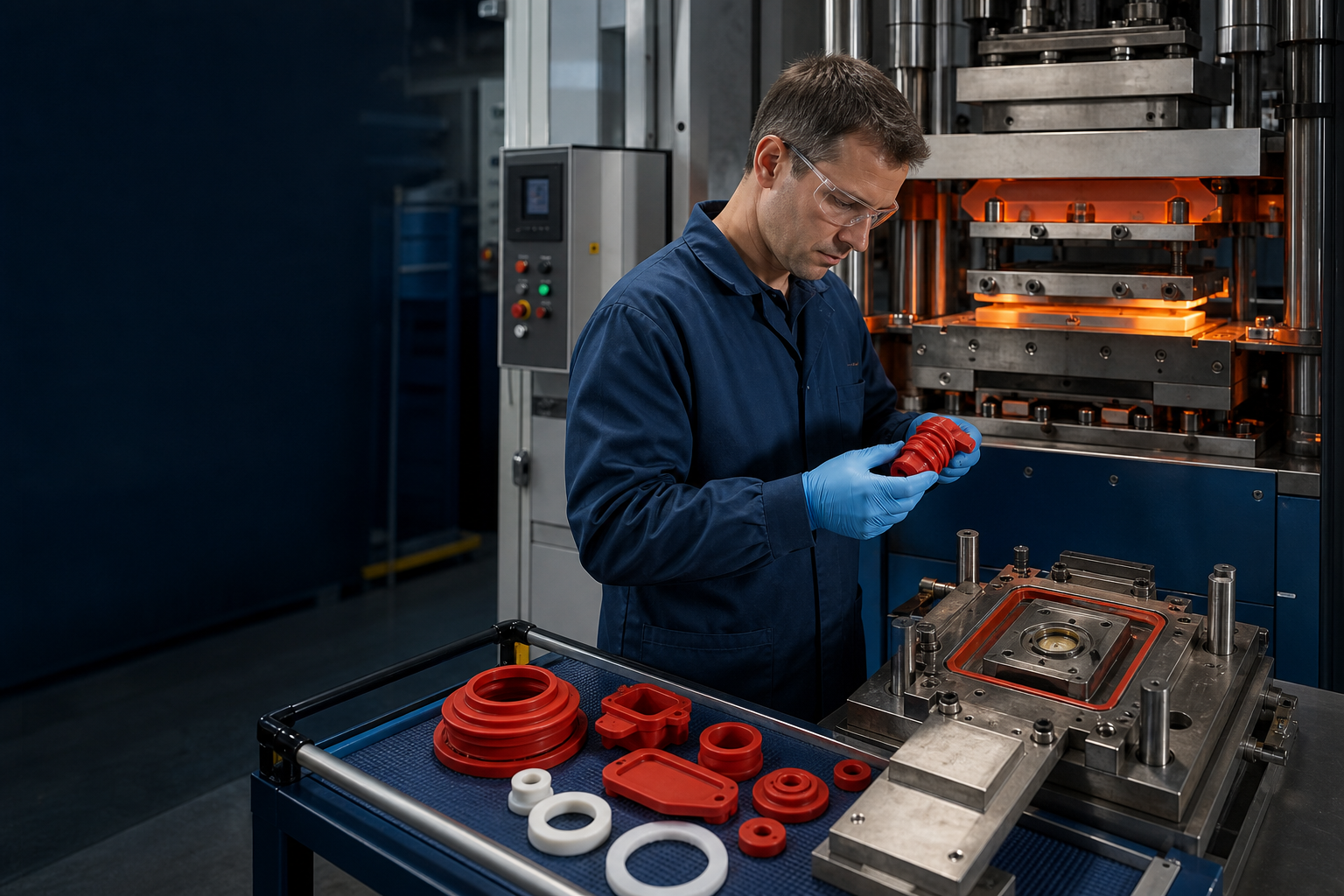
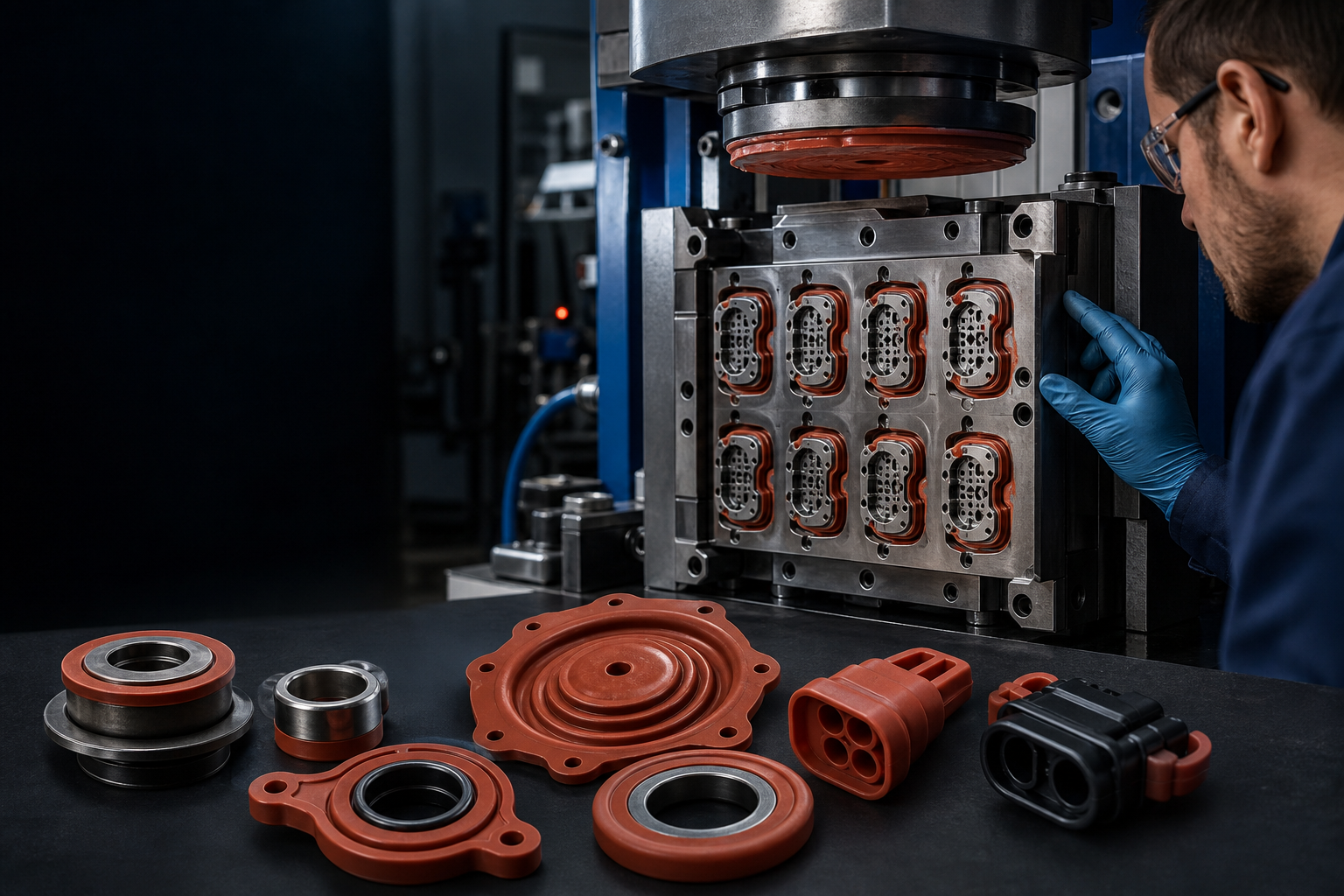
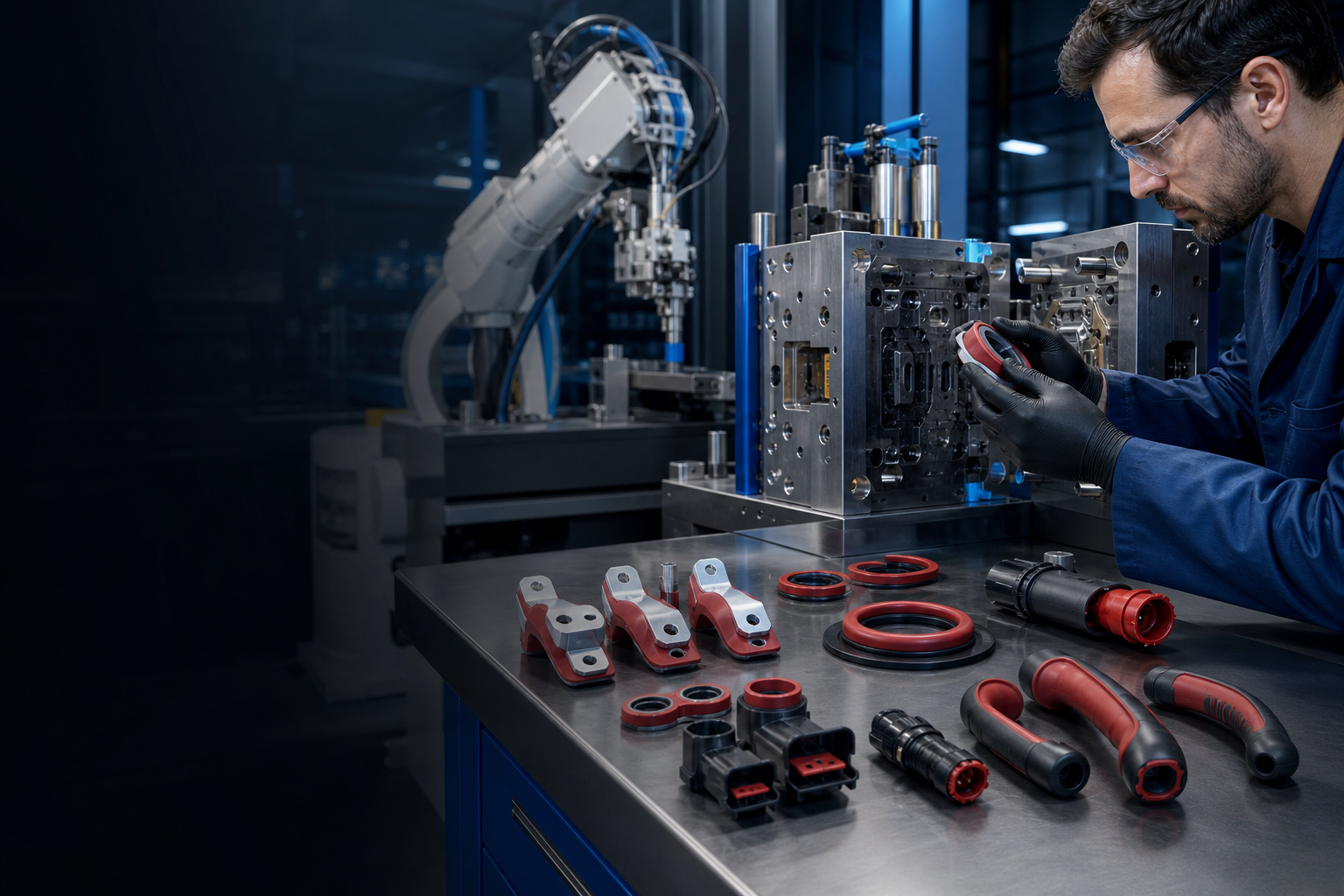
These manufacturing views show the type of molding, tooling and inspection context considered during engineering review. Final process choice is driven by the approved compound, geometry, tolerances and production volume.
Temperature ratings need context
Material claims are confirmed only against the exact compound and the customer’s intended use. Test reports, declarations and traceability requirements should be agreed before production approval.
Questions Buyers and Engineers Ask
Send the controlling specification with your drawing so our review can address the actual application rather than a generic material label.
What is the maximum temperature of silicone?
There is no single defensible maximum for every compound and part. Continuous versus intermittent exposure, load, media and required remaining properties must all be defined.
Does thicker silicone always perform better at high temperature?
No. Thickness changes heat transfer, cure behavior and stress, but it does not automatically improve long-term sealing or mechanical performance.
Can high-temperature silicone also be food grade?
Some specific compounds may support both sets of requirements, but each claim must be documented for the selected formulation and intended use.
How should a high-temperature part be validated?
Condition samples using representative time, temperature, load and media, then measure the functional properties that control the assembly.
Compare Adjacent Silicone Families
Send Your Drawing and Service Conditions
Tell us what the component must do, where it operates and which material evidence is required. Our team will review the material route, manufacturing process and assumptions that need confirmation.
Recommended information: STEP/STP or PDF drawing, hardness, color, service temperature, media exposure, annual quantity, target market and required standards.