Solid Silicone / HCR for Durable Custom Parts
A heat-cured, high-consistency silicone platform for compression- and transfer-molded components, extruded profiles and robust sealing geometry.
REQUEST MATERIAL REVIEWCOMPARE MATERIALSWhat This Material Is—and When It Fits
HCR is a practical starting point when a part needs substantial wall sections, straightforward molded geometry, long extruded profiles or cost-conscious production. The correct compound and cure system still depend on temperature, media exposure, color, regulatory documentation and the finished-part test plan.
Choose HCR when the drawing favors robust sections, molded seals, bellows, gaskets, plugs, pads or custom profiles and when the project benefits from flexible tooling and production-volume options.
Material Characteristics to Define
| Material form | Millable, high-consistency silicone compound |
|---|---|
| Typical processes | Compression molding, transfer molding and extrusion |
| Design variables | Hardness, color, cure system, reinforcement and surface finish |
| Best-fit geometry | Thicker sections, molded features, profiles and durable seals |
| Verification | Finished-part dimensions and project-defined material tests |
| Key trade-off | Not the preferred route for every ultra-small or highly automated precision part |
Where This Material Is Commonly Considered
Industrial sealing
Custom gaskets, dust seals, boots and equipment protection.
Aerospace support parts
Flexible covers, isolators and seals where the approved specification controls material selection.
Robotics & automation
Cushions, bellows, cable protection and repeated-motion components.
Food equipment
Washdown seals and handling components when an appropriate documented compound is selected.
Our Material-Selection Workflow
Define
Review the drawing, assembly stack-up and sealing function.
Review
Confirm service temperature, fluids, pressure, motion and cleaning exposure.
Select
Select compound, hardness, cure route and color based on the application.
Validate
Prototype critical geometry and approve dimensional and performance checks before production.
Material, Tooling and Finished Geometry Work Together
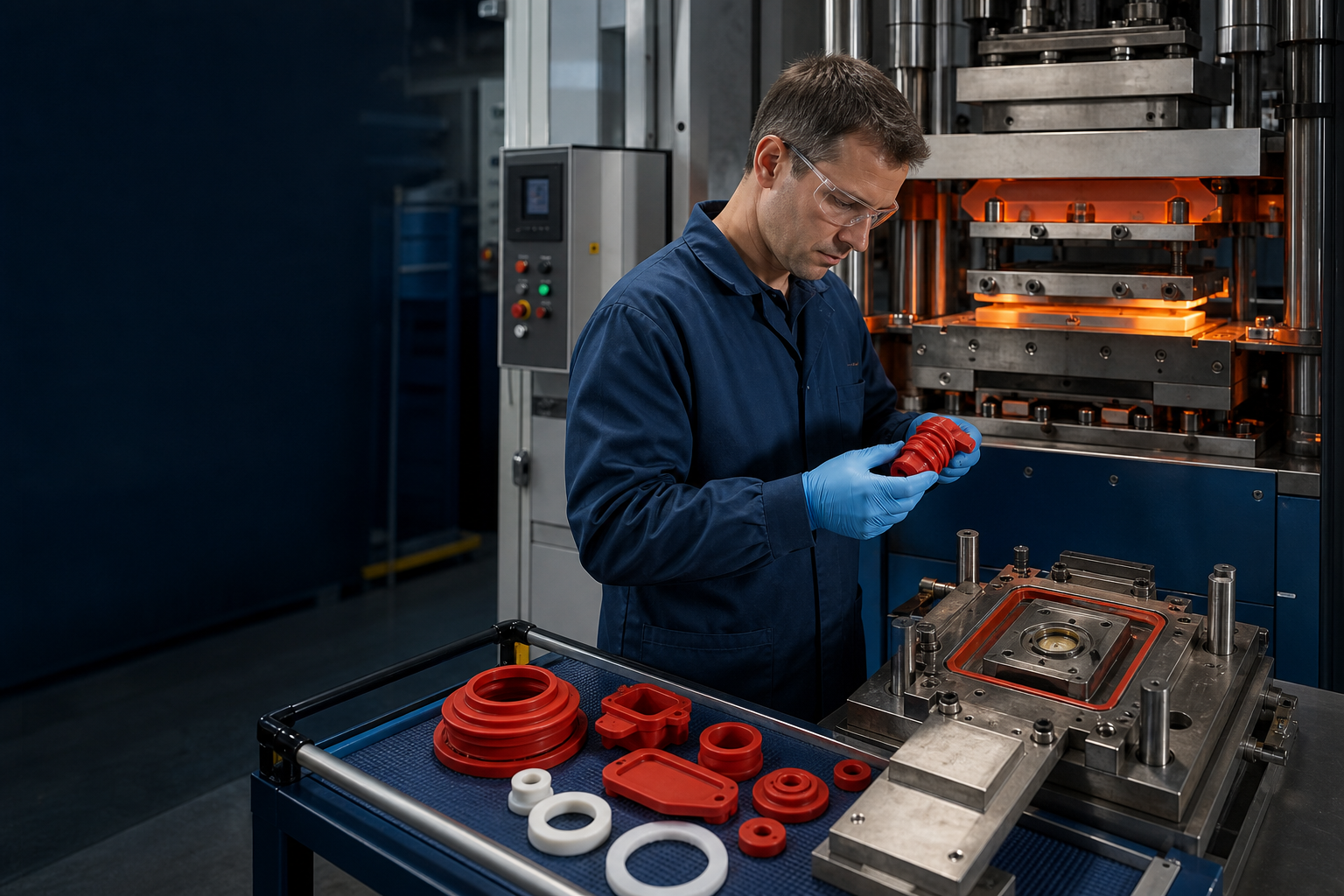
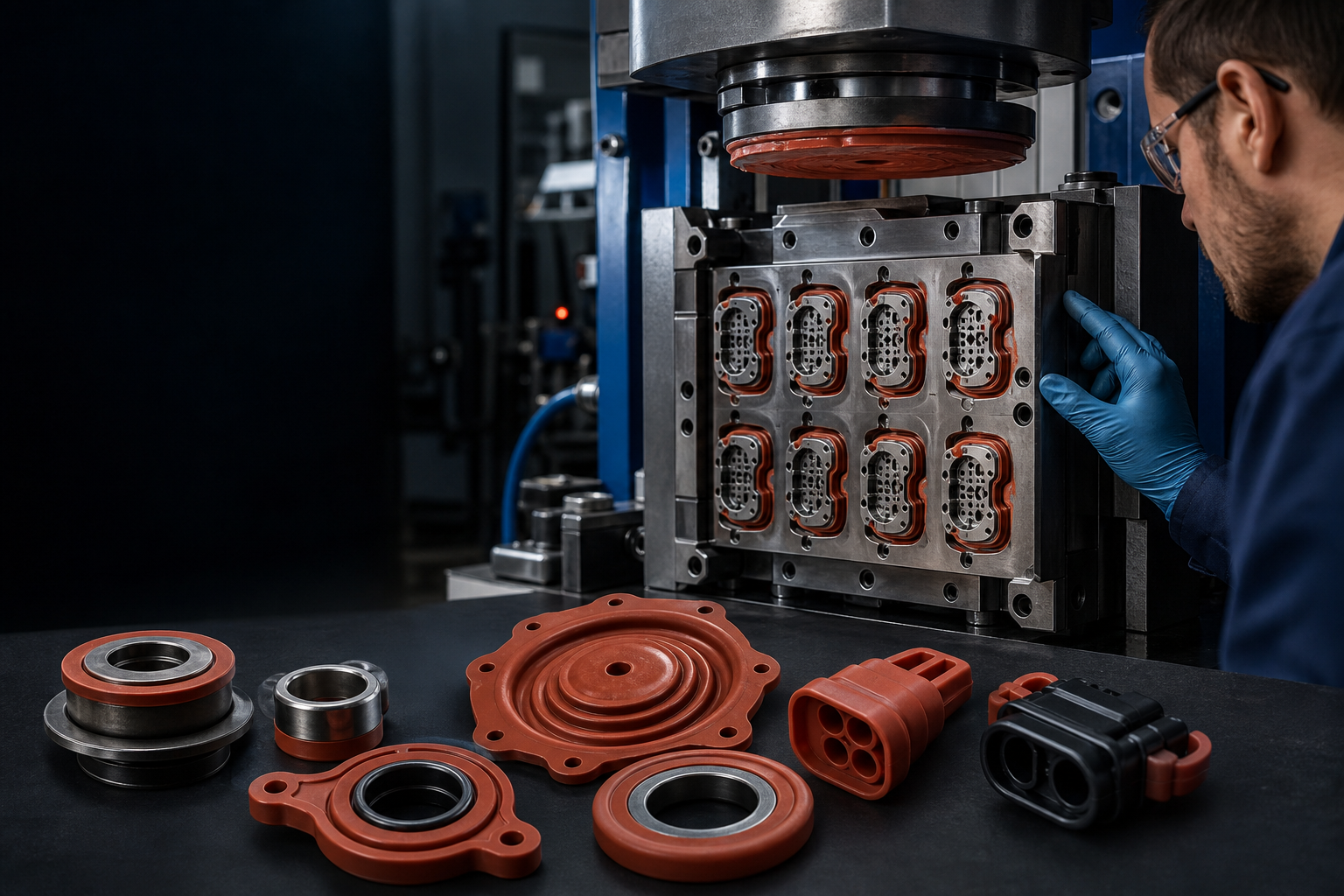
These manufacturing views show the type of molding, tooling and inspection context considered during engineering review. Final process choice is driven by the approved compound, geometry, tolerances and production volume.

Specification-led material control
Material claims are confirmed only against the exact compound and the customer’s intended use. Test reports, declarations and traceability requirements should be agreed before production approval.
Questions Buyers and Engineers Ask
Send the controlling specification with your drawing so our review can address the actual application rather than a generic material label.
Is HCR the same as solid silicone?
In most purchasing and manufacturing discussions, HCR and solid silicone refer to the same high-consistency, millable silicone family. The exact formulation and cure system must still be defined for the project.
Can HCR be used for both molded and extruded parts?
Yes. Depending on compound and geometry, HCR can support compression molding, transfer molding and extrusion. The tooling and cure route are selected around the finished profile and tolerance needs.
What information is needed for a quote?
Send a 2D or 3D drawing, target hardness, color, service environment, annual quantity and any required material or test documentation.
Does solid silicone automatically meet FDA or medical requirements?
No. Compliance depends on the specific compound, ingredients, processing, intended use and supporting documentation. Requirements must be identified before material approval.
Compare Adjacent Silicone Families
Send Your Drawing and Service Conditions
Tell us what the component must do, where it operates and which material evidence is required. Our team will review the material route, manufacturing process and assumptions that need confirmation.
Recommended information: STEP/STP or PDF drawing, hardness, color, service temperature, media exposure, annual quantity, target market and required standards.