Fluorosilicone Rubber for Fuel and Fluid Exposure
Specialty FVMQ components developed for applications that need silicone-like flexibility with improved resistance to selected fuels, oils and solvents.
REQUEST MATERIAL REVIEWCOMPARE MATERIALSWhat This Material Is—and When It Fits
Fluid compatibility depends on the exact chemical, concentration, temperature, pressure, exposure duration and acceptance criterion. Fluorosilicone can offer a useful balance for aerospace and fuel-system sealing, but it may involve different mechanical properties, cost and processing considerations than standard VMQ silicone.
Choose fluorosilicone for seals, diaphragms, grommets and molded components exposed to specified aviation fuels, oils or chemical media where standard silicone does not provide the required resistance.
Material Characteristics to Define
| Polymer designation | FVMQ fluorosilicone rubber |
|---|---|
| Primary advantage | Improved resistance to selected fuels, oils and solvents versus standard VMQ |
| Critical inputs | Exact fluid, concentration, temperature, pressure and exposure time |
| Process options | Compression or transfer molding and other routes by compound and geometry |
| Verification | Volume change, hardness, mass or functional sealing after conditioning |
| Key trade-off | Higher cost and a different mechanical-property balance than standard silicone |
Where This Material Is Commonly Considered
Aerospace fuel systems
Custom seals and flexible components qualified to the controlling specification.
Automotive fluid handling
Specialty gaskets and seals exposed to defined fuels or oils.
Chemical sensing equipment
Flexible barriers and seals reviewed against the exact media.
Industrial fluid control
Diaphragms, plugs and sealing elements for specified chemical environments.
Our Material-Selection Workflow
Define
Identify every fluid, blend, additive and cleaning chemical.
Review
Define temperature, pressure, exposure duration and mechanical motion.
Select
Select an FVMQ compound against the controlling material specification.
Validate
Condition samples and measure the functional property required by the assembly.
Material, Tooling and Finished Geometry Work Together
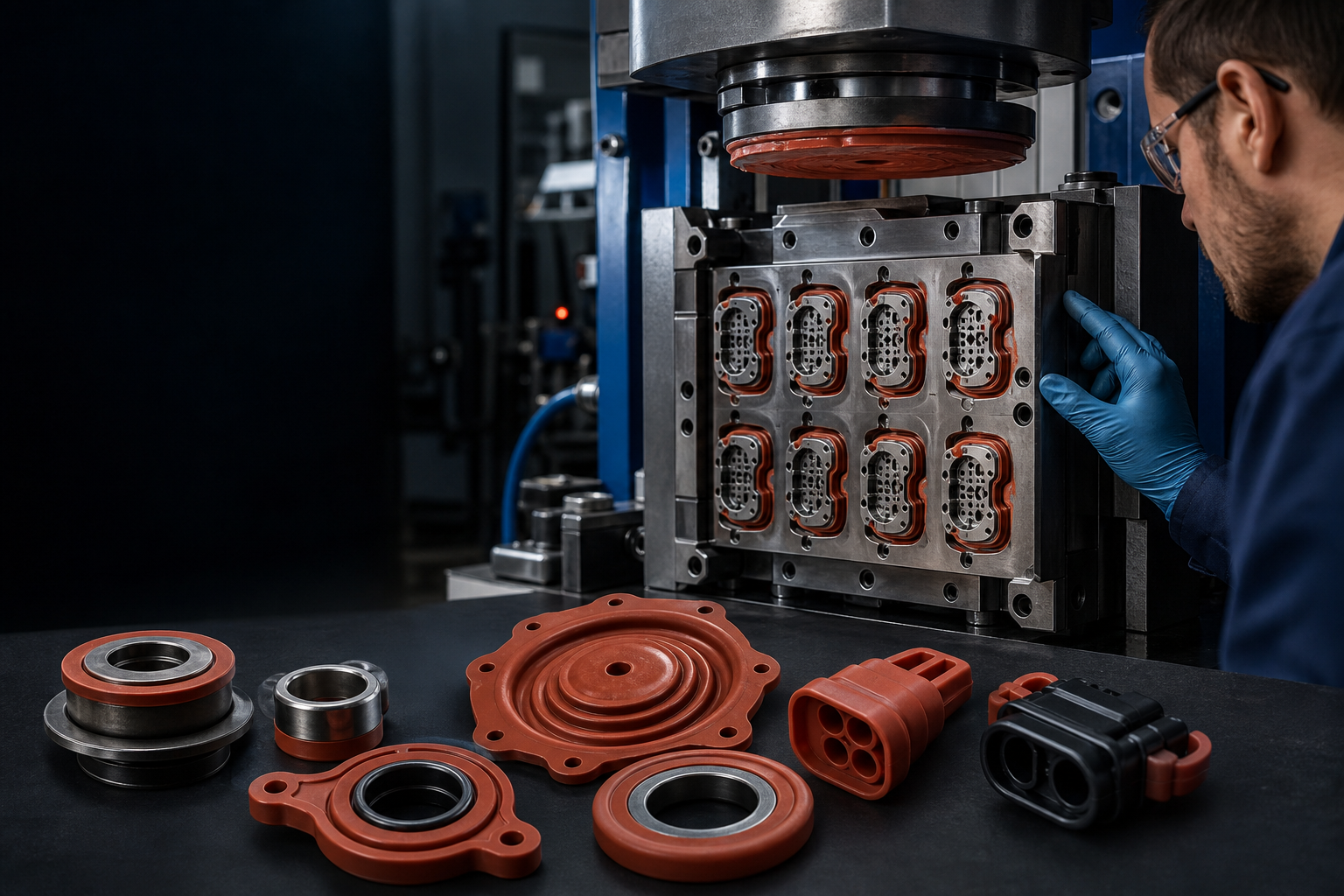
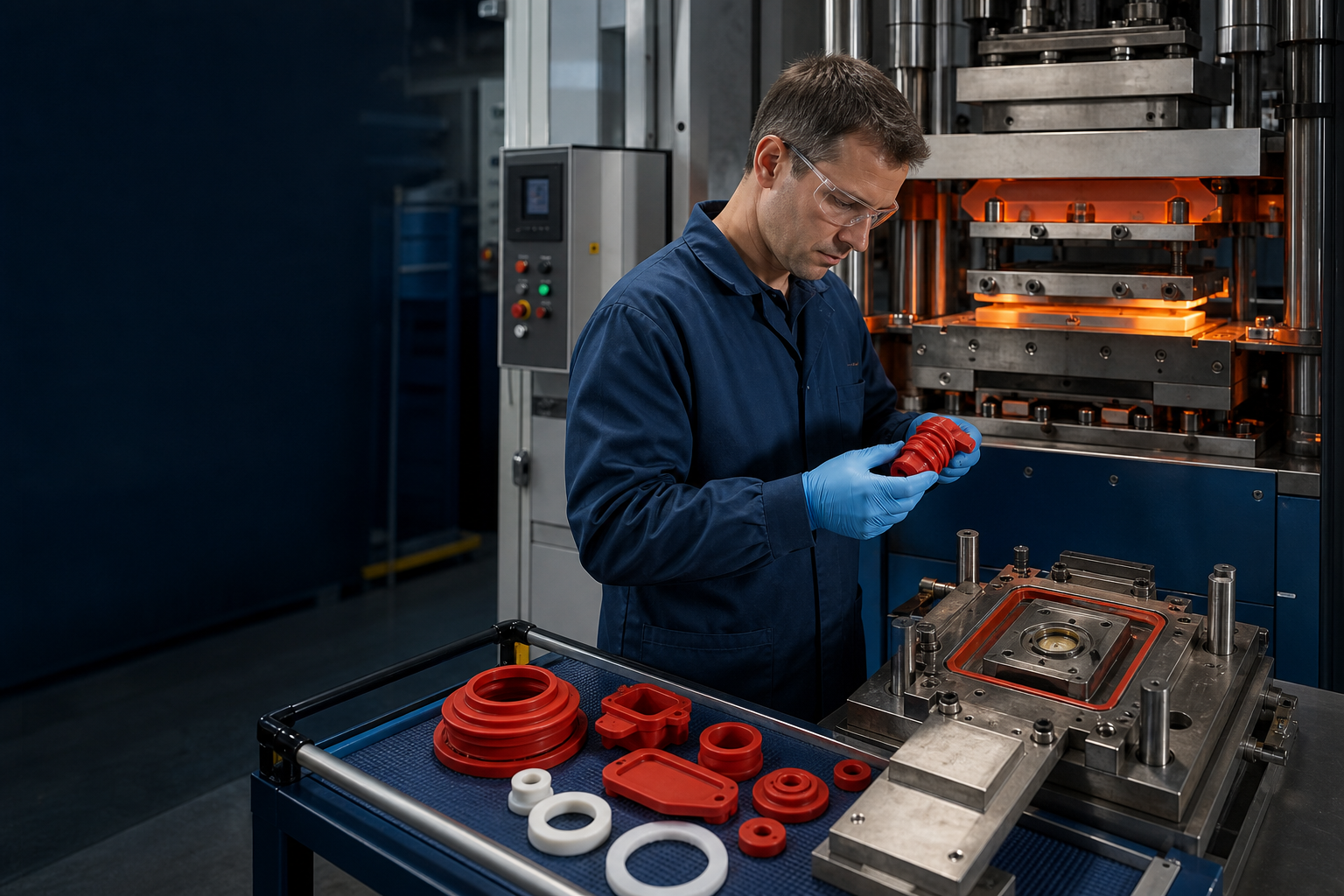
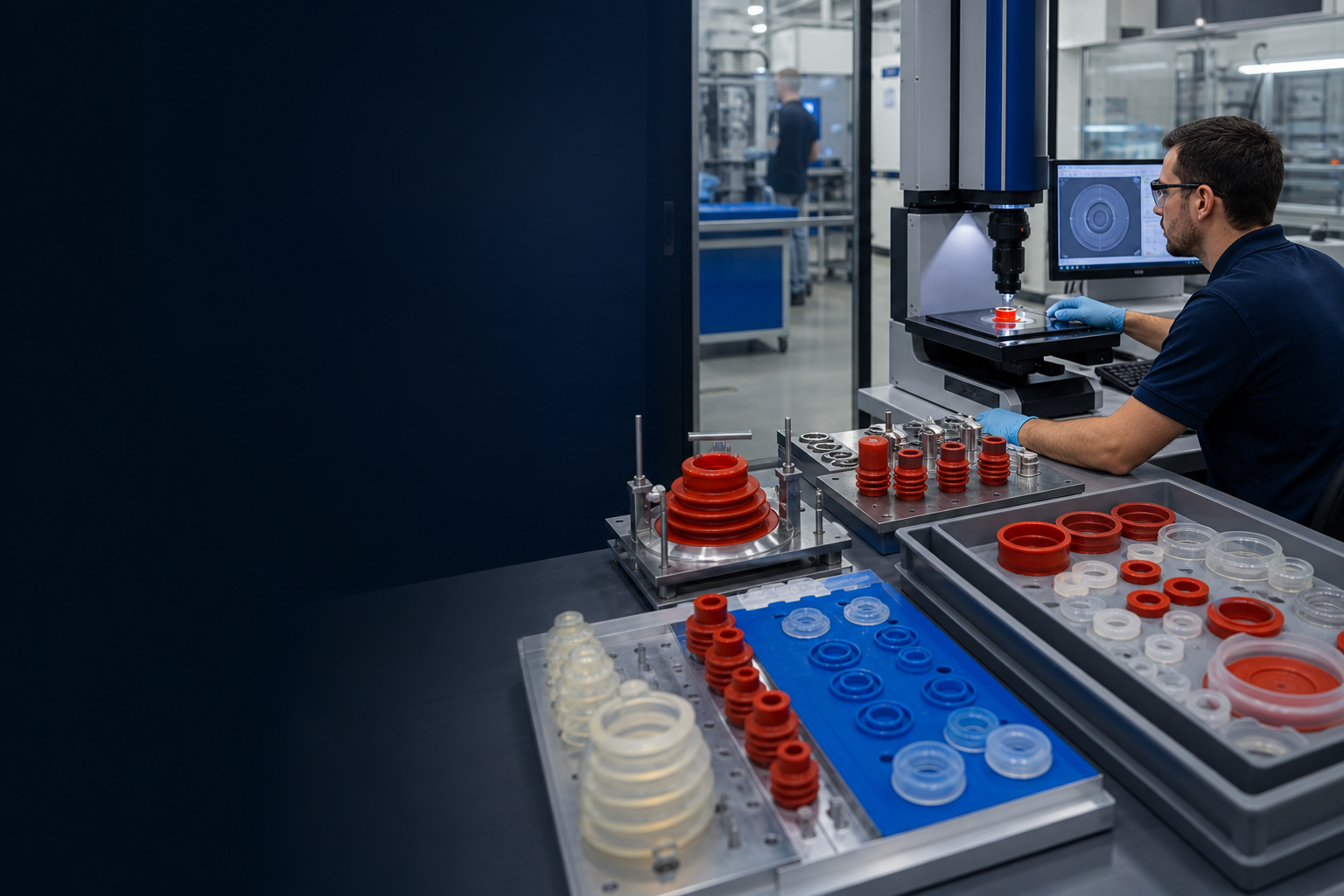
These manufacturing views show the type of molding, tooling and inspection context considered during engineering review. Final process choice is driven by the approved compound, geometry, tolerances and production volume.
Use the controlling aerospace or customer specification
Material claims are confirmed only against the exact compound and the customer’s intended use. Test reports, declarations and traceability requirements should be agreed before production approval.
Questions Buyers and Engineers Ask
Send the controlling specification with your drawing so our review can address the actual application rather than a generic material label.
Is fluorosilicone better than standard silicone?
It is better for some fuel and oil exposures, but not automatically better in every property. Mechanical requirements, cost, temperature and media must be balanced.
Is FVMQ the same as fluorocarbon rubber?
No. FVMQ is fluorosilicone; FKM is fluorocarbon rubber. They have different property profiles and processing considerations.
How should fluid compatibility be tested?
Use the actual fluid or a defined reference fluid at representative temperature and duration, then measure the property that controls function.
What is needed for an aerospace quote?
Provide the drawing, governing specification and revision, approved material requirements, fluid exposure, temperature range, quantity and inspection or traceability expectations.
Compare Adjacent Silicone Families
Send Your Drawing and Service Conditions
Tell us what the component must do, where it operates and which material evidence is required. Our team will review the material route, manufacturing process and assumptions that need confirmation.
Recommended information: STEP/STP or PDF drawing, hardness, color, service temperature, media exposure, annual quantity, target market and required standards.