Flame-Retardant Silicone Components by Required Rating
Custom molded and extruded parts developed around the specified flammability method, thickness, color, electrical environment and finished assembly.
REQUEST MATERIAL REVIEWCOMPARE MATERIALSWhat This Material Is—and When It Fits
Flammability design begins by identifying the exact standard and classification required by the end product. The silicone component may also need electrical insulation, sealing, thermal stability or low-smoke behavior, so the compound must be chosen against the complete requirement set.
Choose this review path for electrical enclosures, lighting equipment, transportation systems, aerospace support components and protective seals where a documented flammability classification is required.
Material Characteristics to Define
| Material form | Flame-retardant HCR, LSR or specialty silicone by project |
|---|---|
| Critical inputs | Required test, classification, thickness and color |
| Design focus | Wall section, air gaps, ignition exposure and proximity to conductors |
| Documentation | Compound-specific test report or recognition as required |
| Verification | Finished-part dimensions plus system-level evaluation by the customer |
| Key limitation | A small-scale material rating is not a finished-product fire rating |
Where This Material Is Commonly Considered
Electrical enclosures
Seals, grommets and insulating components.
Transportation equipment
Protective parts where the controlling specification defines flammability.
Lighting & power systems
Flexible insulation and environmental sealing near electrical sources.
Aerospace support assemblies
Custom components reviewed against drawing-specific documentation.
Our Material-Selection Workflow
Define
Identify the exact flammability standard and required classification.
Review
Confirm minimum tested thickness, color and any electrical or thermal requirements.
Select
Select a compound with appropriate supporting evidence.
Validate
Verify finished geometry and complete the end-product assessment required by the customer.
Material, Tooling and Finished Geometry Work Together
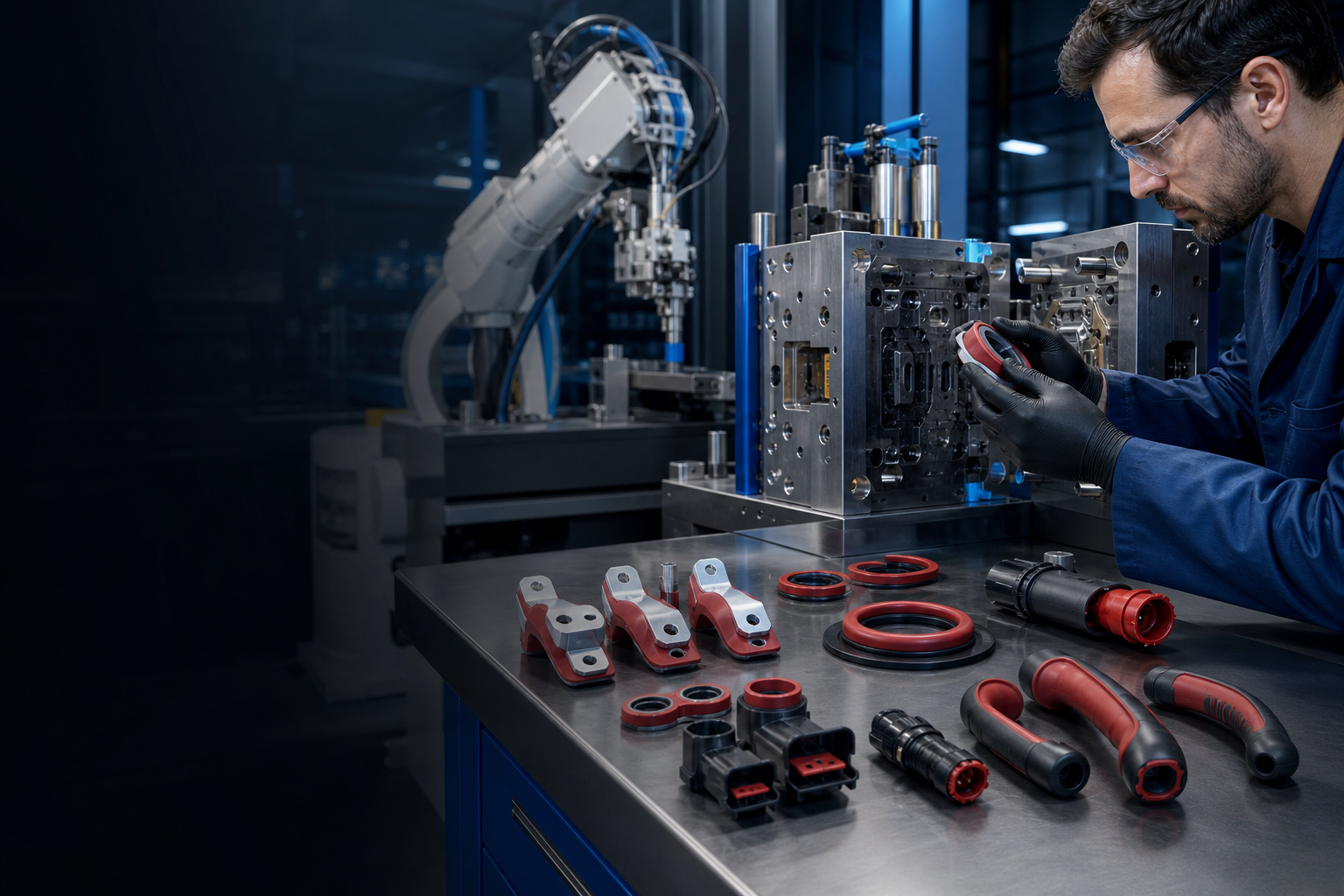
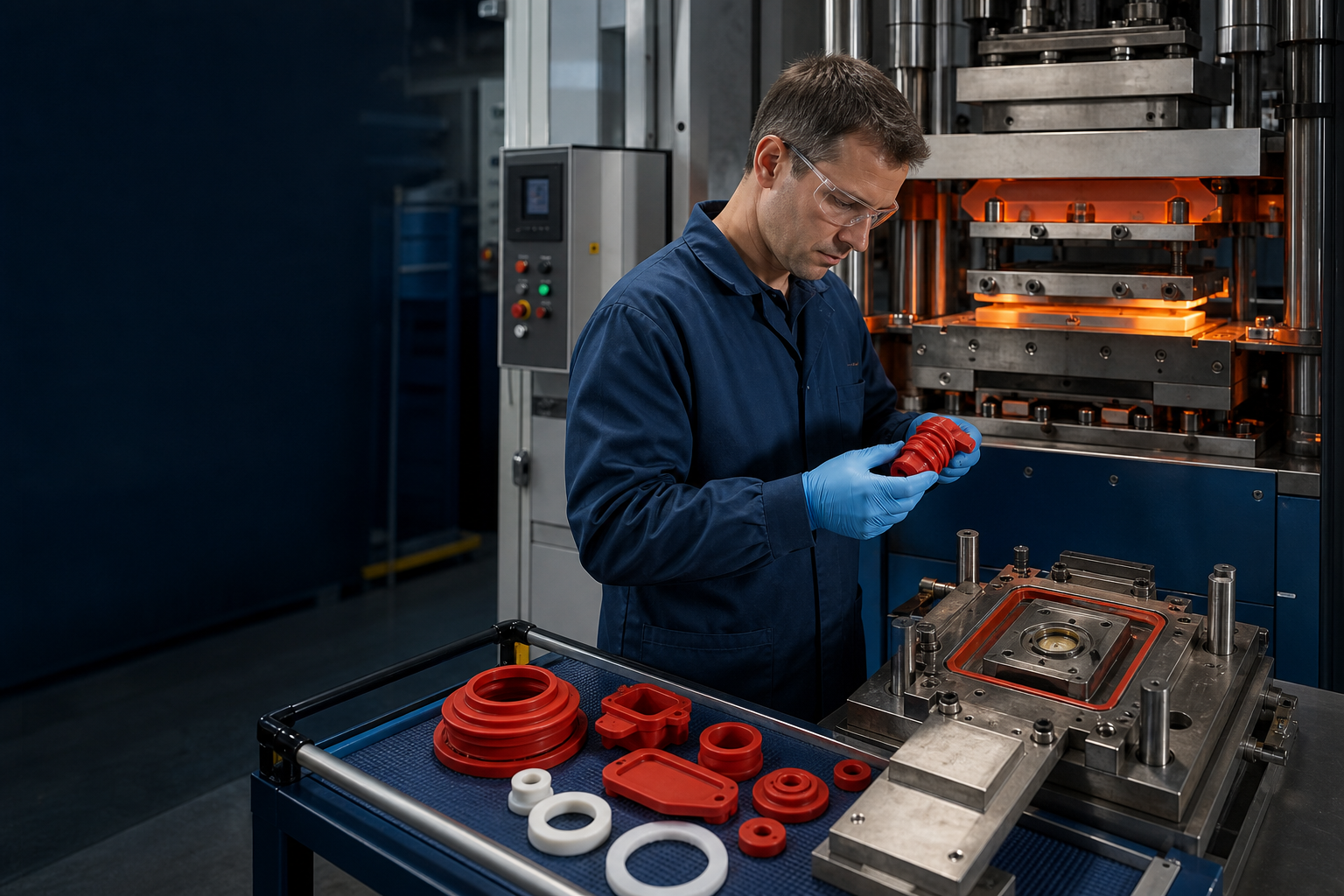
These manufacturing views show the type of molding, tooling and inspection context considered during engineering review. Final process choice is driven by the approved compound, geometry, tolerances and production volume.

Understand what a UL 94 rating means
Material claims are confirmed only against the exact compound and the customer’s intended use. Test reports, declarations and traceability requirements should be agreed before production approval.
Questions Buyers and Engineers Ask
Send the controlling specification with your drawing so our review can address the actual application rather than a generic material label.
Does UL 94 V-0 mean the part cannot burn?
No. UL 94 classifications describe behavior under a defined small-scale test. They do not mean a material is noncombustible or that a finished product is fire safe under every condition.
Why does material thickness matter?
Flammability classifications are tied to tested specimen conditions, including thickness. A rating at one thickness should not be assumed at another.
Can flame-retardant silicone also be conductive?
Specialty formulations may combine functions, but conductive fillers and flame-retardant systems change the property balance. A documented compound must be selected for the complete requirement.
What evidence should purchasing request?
Request the exact compound designation, tested thickness and color, applicable report or recognition, and confirmation that the supplied material matches the approved formulation.
Compare Adjacent Silicone Families
Send Your Drawing and Service Conditions
Tell us what the component must do, where it operates and which material evidence is required. Our team will review the material route, manufacturing process and assumptions that need confirmation.
Recommended information: STEP/STP or PDF drawing, hardness, color, service temperature, media exposure, annual quantity, target market and required standards.