Food-Grade Silicone Parts for Processing Equipment
Custom seals, gaskets, profiles and molded components developed around food-contact conditions, cleaning exposure and documented compound selection.
REQUEST MATERIAL REVIEWCOMPARE MATERIALSWhat This Material Is—and When It Fits
The phrase “food grade” should never replace an application review. A gasket used in dry packaging, a seal exposed to edible oil and a component repeatedly steam-cleaned can require different material evidence and validation. LSAN Silicone confirms the requested jurisdiction and supporting documentation before material approval.
Use this material pathway for custom gaskets, door seals, filling-equipment parts, tubing profiles, plugs and flexible handling components in food and beverage equipment.
Material Characteristics to Define
| Material routes | HCR molded parts, custom extrusions or project-appropriate LSR |
|---|---|
| Critical inputs | Food type, contact duration, service temperature and cleaning chemistry |
| Design focus | Hygienic geometry, sealing compression, drainage and cleanability |
| Documentation | Compound-specific declarations or test evidence agreed before production |
| Color options | Project-defined colors, including visibility-focused options where available |
| Key limitation | Food-contact suitability is formulation- and use-specific |
Where This Material Is Commonly Considered
Filling & packaging
Custom seals, nozzles, guides and flexible interfaces.
Food processing machinery
Washdown gaskets, profiles and protective parts.
Beverage equipment
Seals and fluid-contact components matched to cleaning conditions.
Commercial appliances
Door seals, buffers and molded parts for repeated use.
Our Material-Selection Workflow
Define
Identify food type, contact time, temperature and applicable market requirements.
Review
Review cleaning agents, steam, pressure and mechanical cycling.
Select
Select a specific documented silicone compound and manufacturing route.
Validate
Approve finished-part dimensions and any required project-specific tests.
Material, Tooling and Finished Geometry Work Together
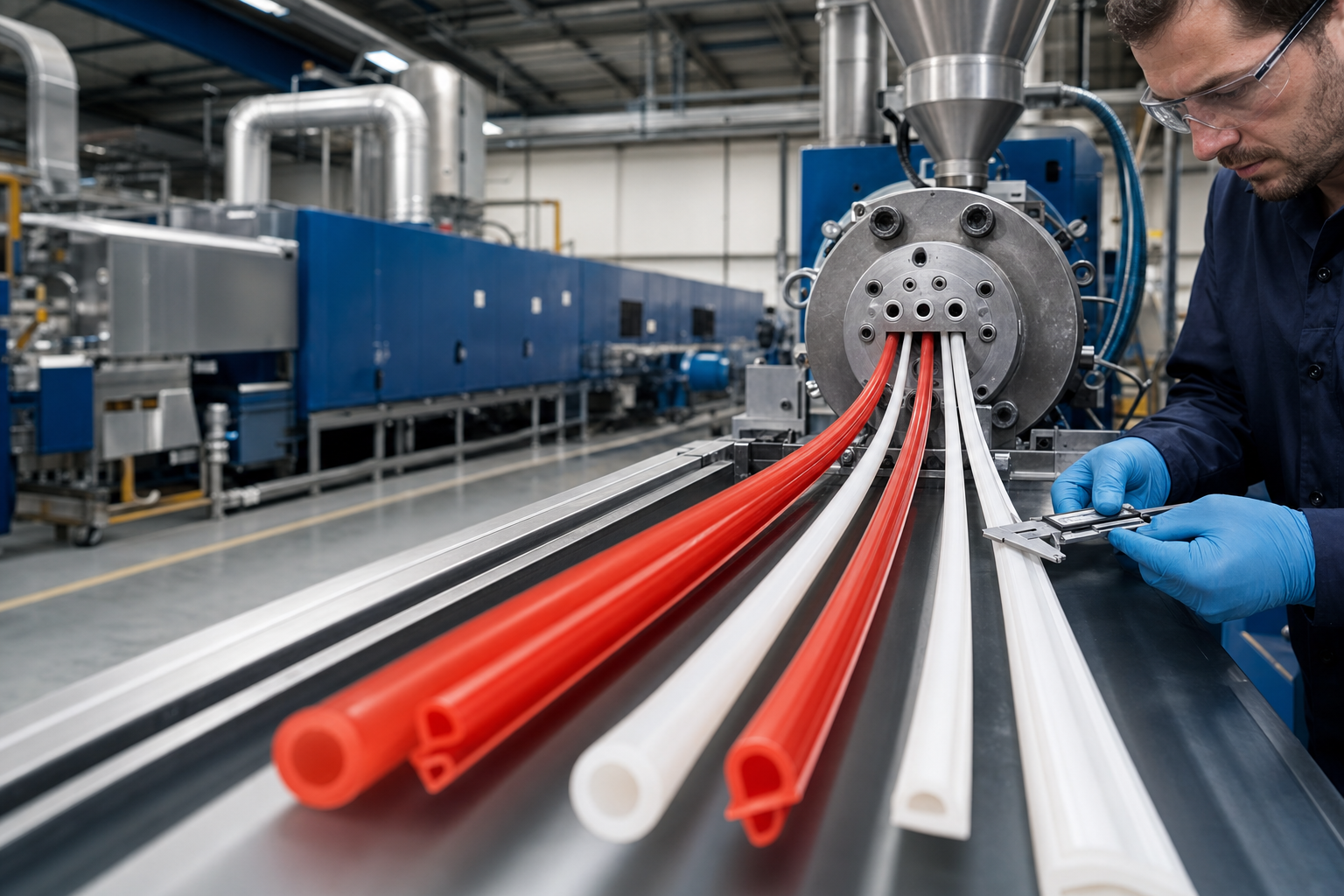
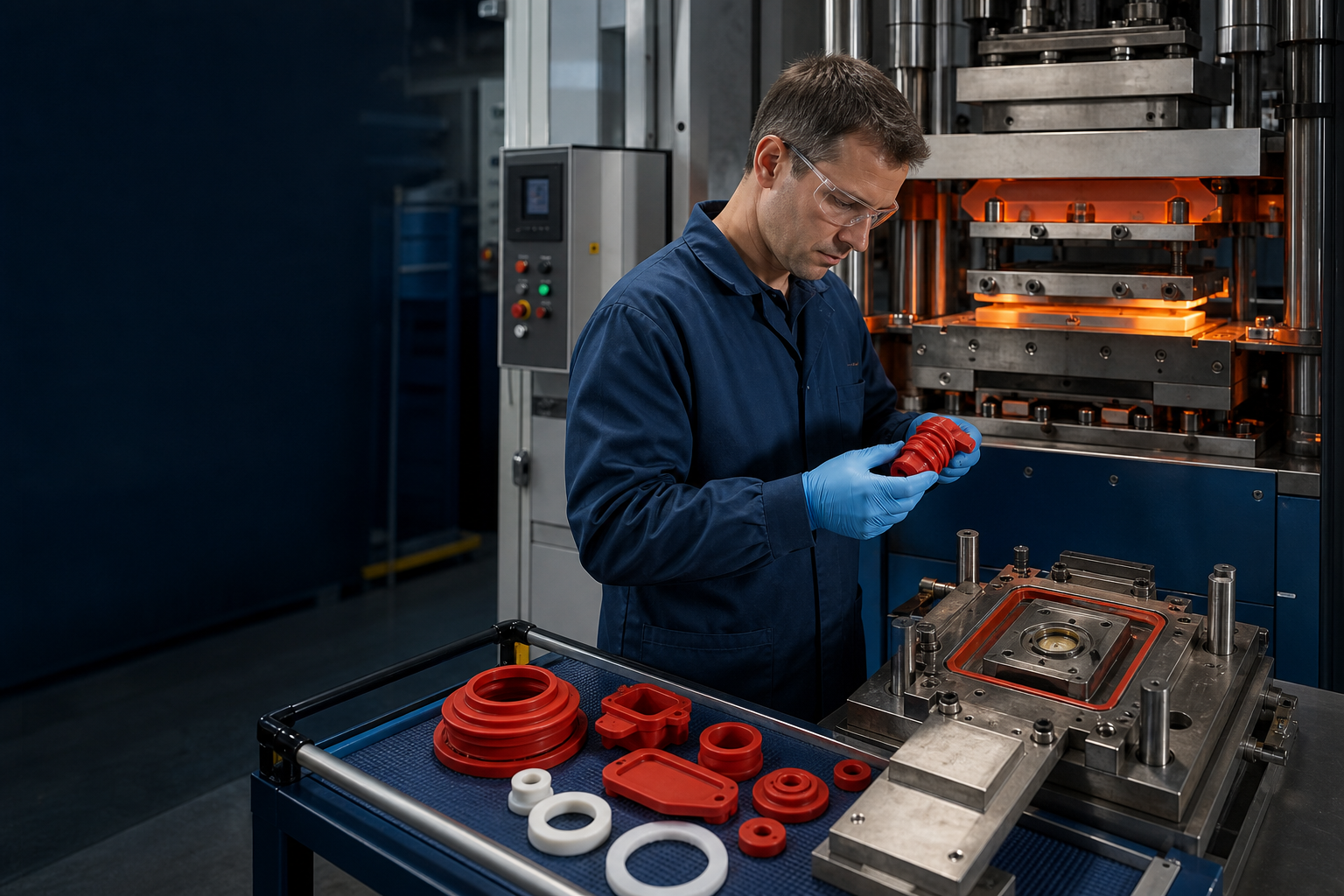
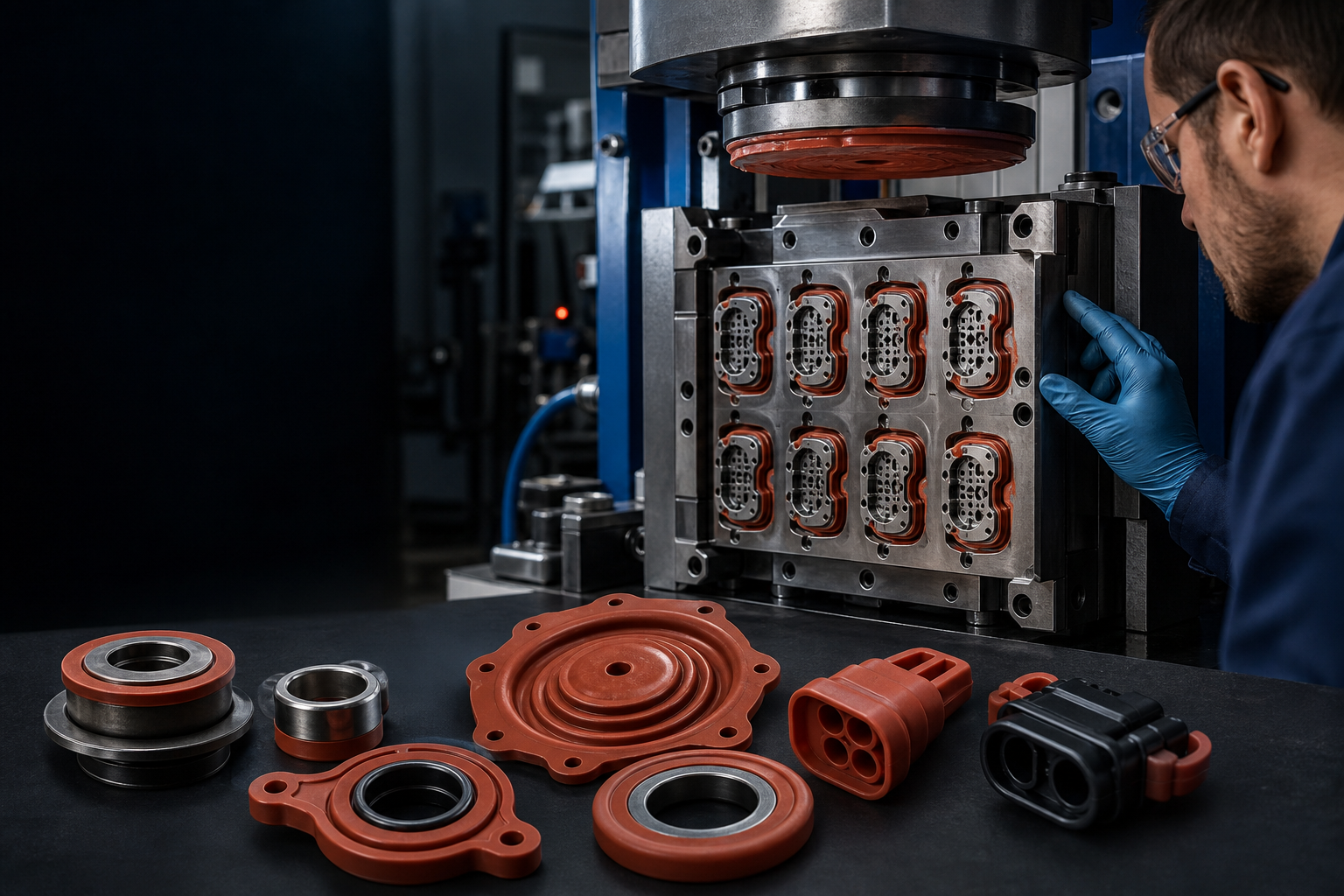
These manufacturing views show the type of molding, tooling and inspection context considered during engineering review. Final process choice is driven by the approved compound, geometry, tolerances and production volume.
Food-contact claims require a specific basis
Material claims are confirmed only against the exact compound and the customer’s intended use. Test reports, declarations and traceability requirements should be agreed before production approval.
Questions Buyers and Engineers Ask
Send the controlling specification with your drawing so our review can address the actual application rather than a generic material label.
Is every silicone naturally food grade?
No. Food-contact suitability depends on the complete formulation, processing and intended conditions of use. Request compound-specific documentation.
What application information is needed?
Provide food type, maximum temperature, contact duration, cleaning chemistry, pressure or vacuum conditions and applicable market requirements.
Can food-grade silicone be colored?
Color may be possible, but pigments and additives must be included in the material review. Do not assume every color uses the same compliant formulation.
Can you make both gaskets and extruded profiles?
Yes, subject to geometry and compound selection. Drawings should define the cross-section, joint method, sealing compression and tolerance requirements.
Compare Adjacent Silicone Families
Send Your Drawing and Service Conditions
Tell us what the component must do, where it operates and which material evidence is required. Our team will review the material route, manufacturing process and assumptions that need confirmation.
Recommended information: STEP/STP or PDF drawing, hardness, color, service temperature, media exposure, annual quantity, target market and required standards.