Medical-Grade Silicone Components Built Around Intended Use
Material selection, molding and documentation aligned with device contact, exposure duration, sterilization approach and risk-based biological evaluation.
REQUEST MATERIAL REVIEWCOMPARE MATERIALSWhat This Material Is—and When It Fits
A defensible medical silicone project connects the drawing, material specification, supplier documentation, manufacturing controls and final-device evaluation. LSAN Silicone supports drawing review and component manufacturing; the medical-device manufacturer remains responsible for confirming the complete device’s regulatory and biological safety requirements.
Use this pathway for seals, diaphragms, valve components, protective interfaces and other custom silicone parts used in medical or diagnostic equipment where documentation and change control matter as much as geometry.
Material Characteristics to Define
| Material routes | Project-appropriate HCR or LSR systems |
|---|---|
| Critical inputs | Contact type, duration, sterilization, fluids and patient/user exposure |
| Documentation focus | Material identity, lot records and agreed supplier evidence |
| Design review | Flash, particulates, assembly interfaces and cleanability |
| Verification | Finished-part checks plus device-specific evaluation by the legal manufacturer |
| Key limitation | A material label alone does not establish final-device biocompatibility |
Where This Material Is Commonly Considered
Diagnostic equipment
Seals, interfaces and flexible parts for analyzers and sample-handling equipment.
Fluid-management devices
Diaphragms, valve elements and closures evaluated around the fluid path.
Surgical equipment
Protective and sealing components with defined cleaning or sterilization exposure.
Patient-contact accessories
Custom molded interfaces where contact category and duration guide evidence needs.
Our Material-Selection Workflow
Define
Define device use, body-contact category, exposure duration and sterilization method.
Review
Review the component drawing, material contact path and manufacturing risks.
Select
Select a candidate compound and agree required supplier and production documentation.
Validate
Prototype, inspect and support the customer’s finished-device verification plan.
Material, Tooling and Finished Geometry Work Together
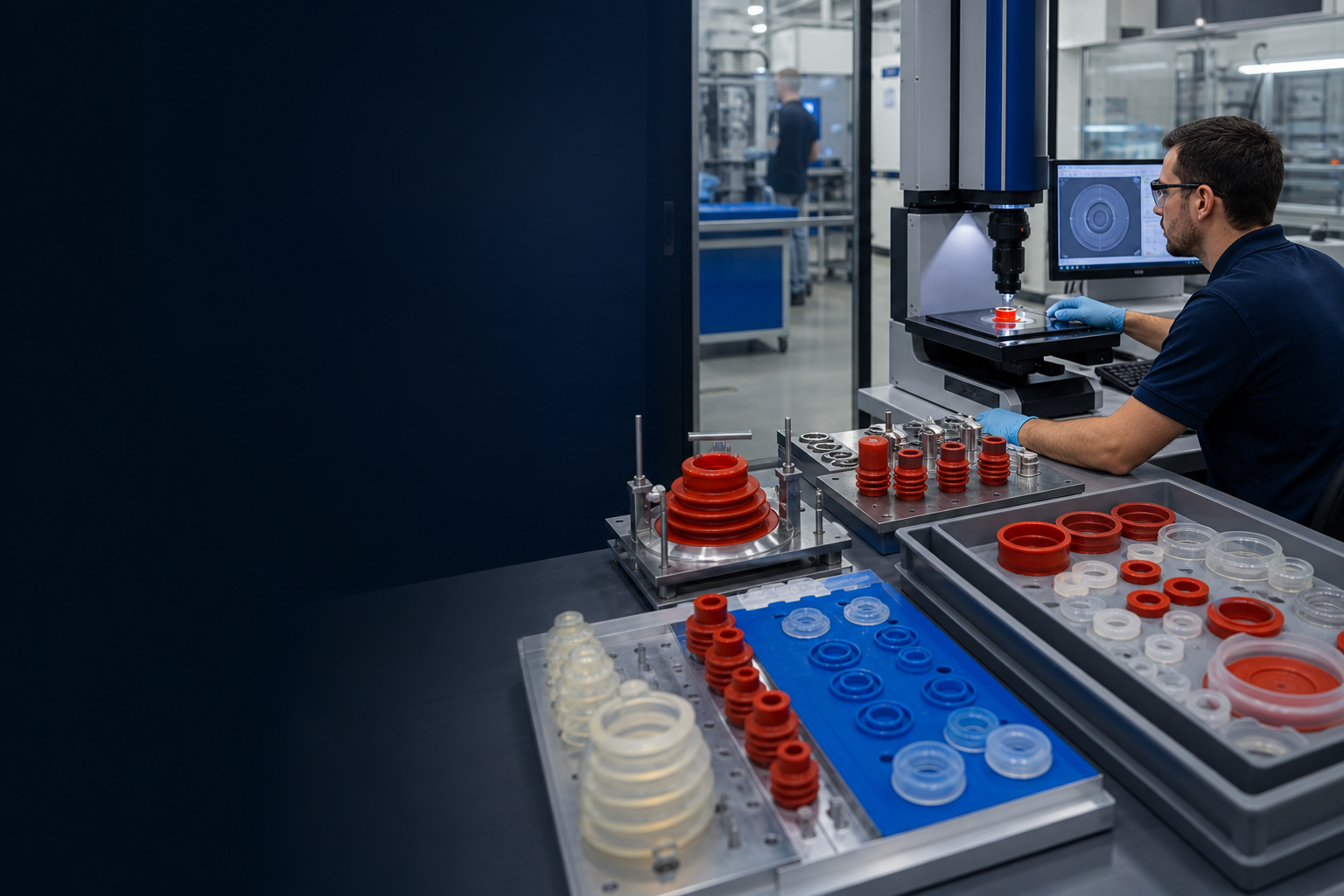
These manufacturing views show the type of molding, tooling and inspection context considered during engineering review. Final process choice is driven by the approved compound, geometry, tolerances and production volume.


Biological evaluation is risk-based
Material claims are confirmed only against the exact compound and the customer’s intended use. Test reports, declarations and traceability requirements should be agreed before production approval.
Questions Buyers and Engineers Ask
Send the controlling specification with your drawing so our review can address the actual application rather than a generic material label.
Does “medical-grade silicone” guarantee ISO 10993 compliance?
No. Biological evaluation is linked to the finished device, intended use and exposure. A compound’s supporting data can contribute evidence, but it does not replace the device manufacturer’s risk-based evaluation.
Can you mold both HCR and LSR medical components?
Material and process selection are project dependent. HCR may suit robust molded geometry, while LSR can support precision closed-mold production; the approved route must match the device requirements.
Can silicone parts be designed for sterilization?
Yes, but the specific sterilization method and number of cycles must be identified early. Material performance and dimensional effects should be verified under the customer’s defined conditions.
What documentation should be requested?
Define the required material declaration, lot traceability, inspection records, change controls and any supplier test reports before quoting and approval.
Compare Adjacent Silicone Families
Send Your Drawing and Service Conditions
Tell us what the component must do, where it operates and which material evidence is required. Our team will review the material route, manufacturing process and assumptions that need confirmation.
Recommended information: STEP/STP or PDF drawing, hardness, color, service temperature, media exposure, annual quantity, target market and required standards.