Liquid Silicone Rubber for Precise, Repeatable Components
Two-part liquid silicone engineered for closed-mold injection processing, fine features, clean repeatability and scalable automated production.
REQUEST MATERIAL REVIEWCOMPARE MATERIALSWhat This Material Is—and When It Fits
LSR selection should begin with the device environment and part function, not with the process alone. Gate location, venting, shutoffs, parting lines, flash expectations and post-cure requirements must be addressed together with hardness, color and documentation.
Choose LSR for precision seals, small diaphragms, medical-device components, electrical protection and intricate molded parts where repeatability and controlled closed-mold processing are central to the project.
Material Characteristics to Define
| Material form | Pumpable, two-component liquid silicone |
|---|---|
| Primary process | Liquid injection molding / LSR injection molding |
| Design strengths | Thin sections, fine details, consistent replication and complex shutoffs |
| Project variables | Hardness, pigment, cure, post-cure, gate and vent strategy |
| Production fit | Projects benefiting from automated metering and repeat cycles |
| Key trade-off | Tooling strategy and upfront mold engineering are especially important |
Where This Material Is Commonly Considered
Medical-device components
Flexible seals, valve features and molded interfaces with project-defined biological evaluation needs.
Electronics protection
Seals, keypads and insulating geometry for compact assemblies.
Aerospace & sensing
Small precision components produced to drawing and controlled inspection plans.
Robotics & fluid control
Repeatable diaphragms, valve elements and flexible interfaces.
Our Material-Selection Workflow
Define
Classify the intended use, contact conditions and critical dimensions.
Review
Review LSR-specific gating, venting, shutoffs, draft and demolding.
Select
Select a documented compound and define post-cure or cleanliness requirements.
Validate
Validate samples against the drawing, assembly and agreed inspection plan.
Material, Tooling and Finished Geometry Work Together
These manufacturing views show the type of molding, tooling and inspection context considered during engineering review. Final process choice is driven by the approved compound, geometry, tolerances and production volume.
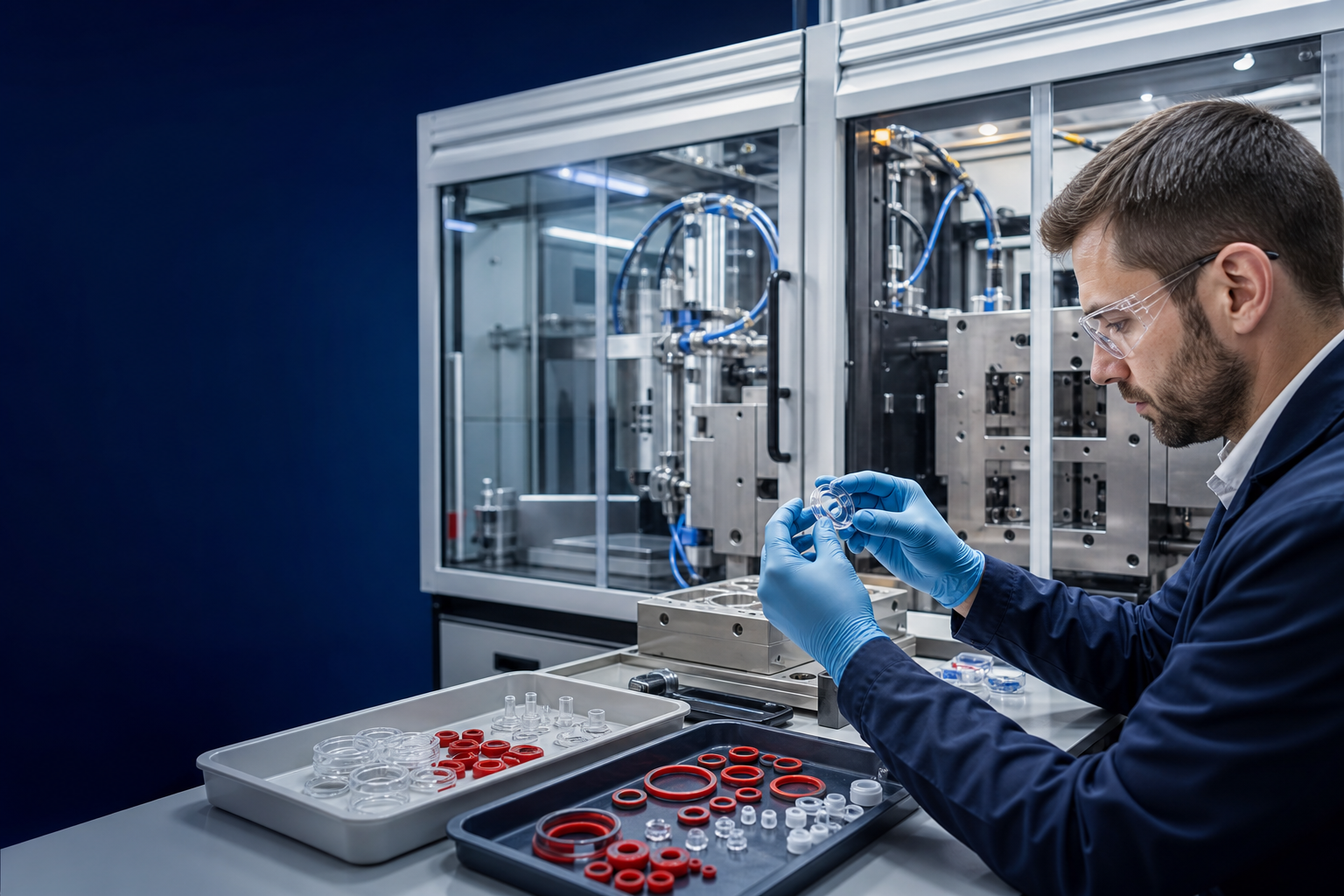
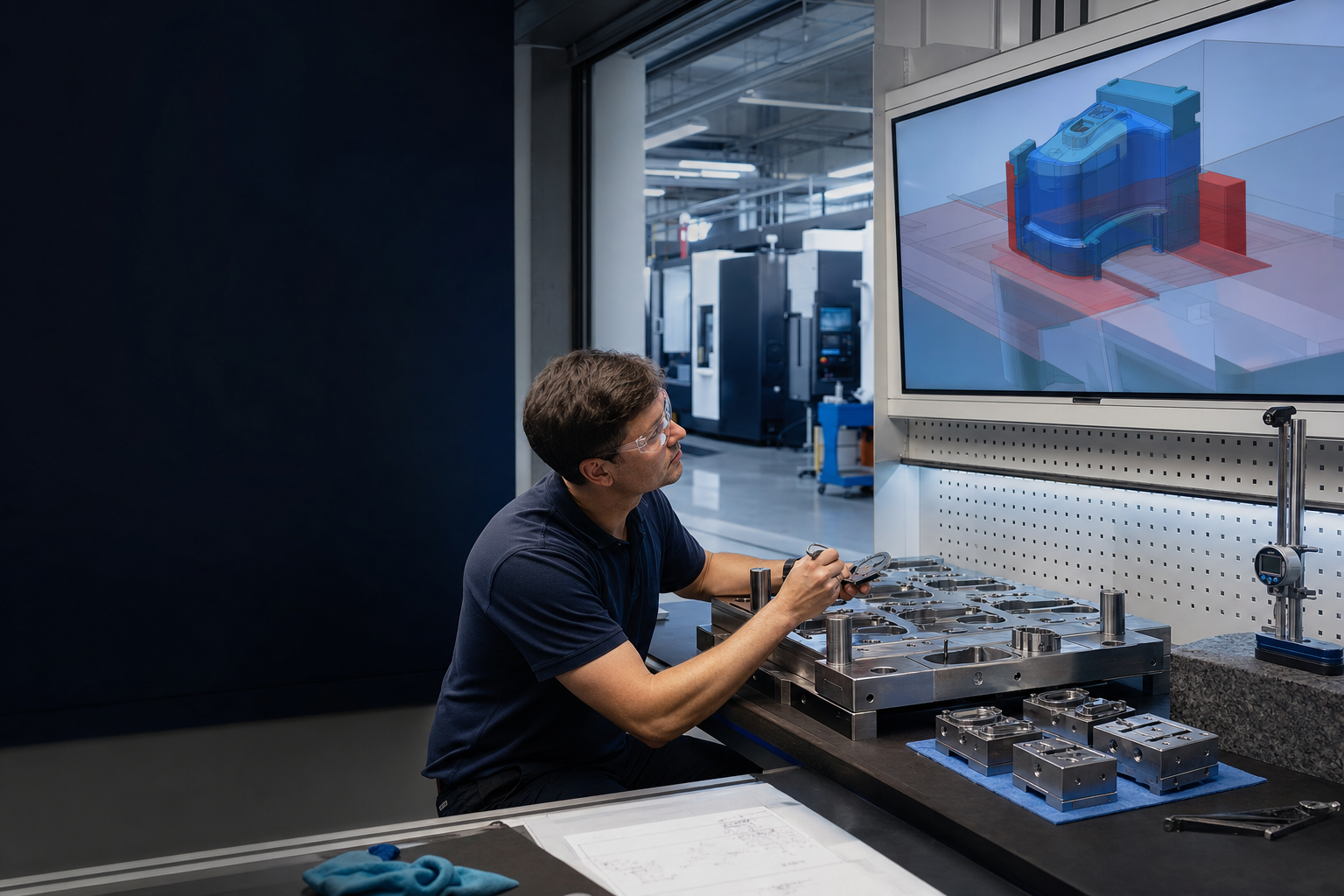
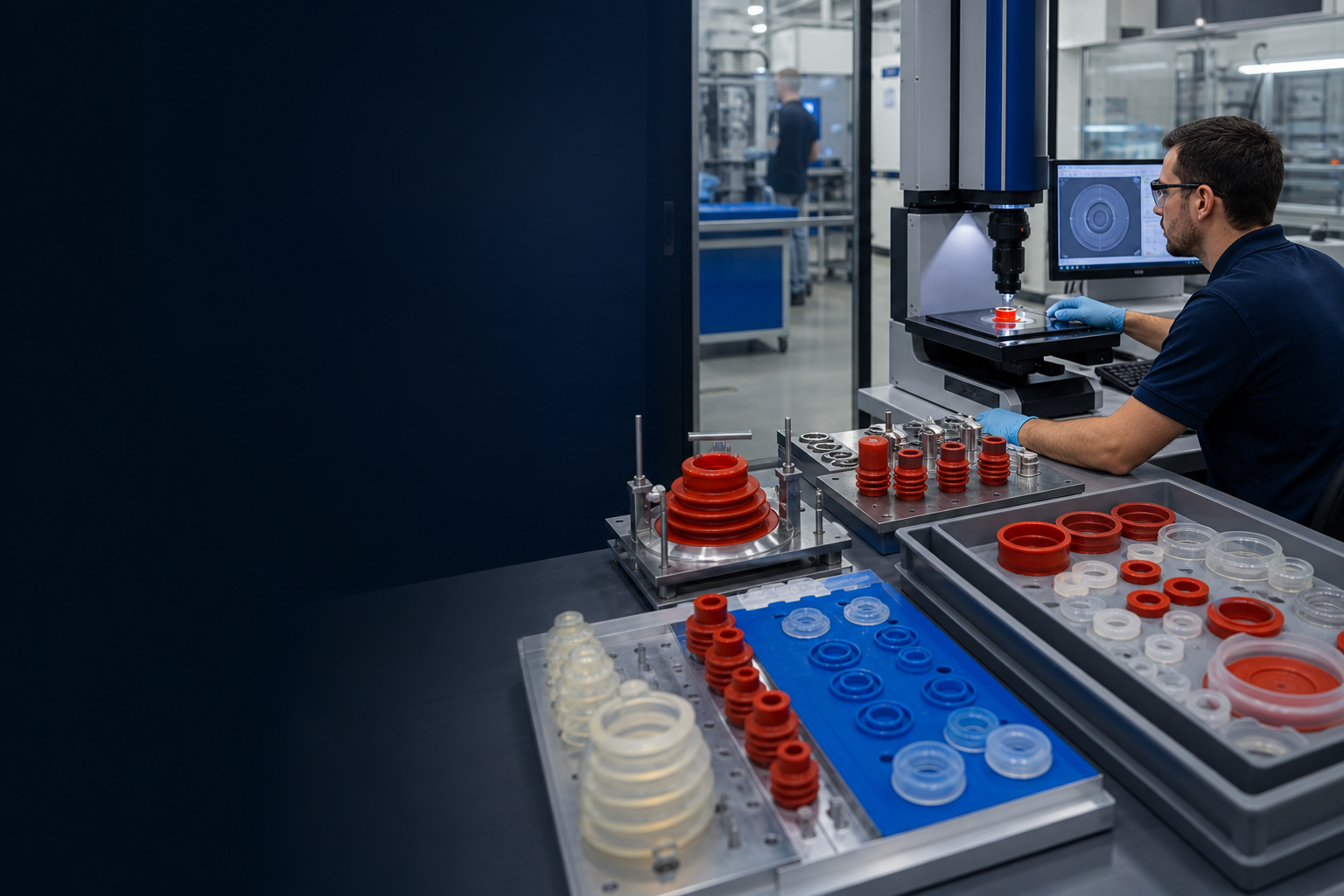
Material evidence follows the intended use
Material claims are confirmed only against the exact compound and the customer’s intended use. Test reports, declarations and traceability requirements should be agreed before production approval.
Questions Buyers and Engineers Ask
Send the controlling specification with your drawing so our review can address the actual application rather than a generic material label.
How is LSR different from HCR?
LSR is pumpable and commonly injection molded in a closed process; HCR is millable and often compression molded, transfer molded or extruded. Geometry, volume and validation needs determine the better route.
Can LSR produce thin or detailed parts?
LSR is frequently selected for thin sections and fine detail, but achievable geometry depends on material flow, tooling, venting and the specified tolerance.
Is post-curing always required?
Not always. Post-cure decisions depend on the compound, intended use, performance targets and customer specification. It should be defined during material review.
What files should engineering review?
Provide STEP or STP files when available, plus a dimensioned PDF, material requirements, annual volume and the assembly or service conditions.
Compare Adjacent Silicone Families
Send Your Drawing and Service Conditions
Tell us what the component must do, where it operates and which material evidence is required. Our team will review the material route, manufacturing process and assumptions that need confirmation.
Recommended information: STEP/STP or PDF drawing, hardness, color, service temperature, media exposure, annual quantity, target market and required standards.