Custom Silicone Plugs, Caps & Stoppers
Reusable and application-specific closures designed around hole size, insertion force, retention, sealing, masking temperature and removal requirements.
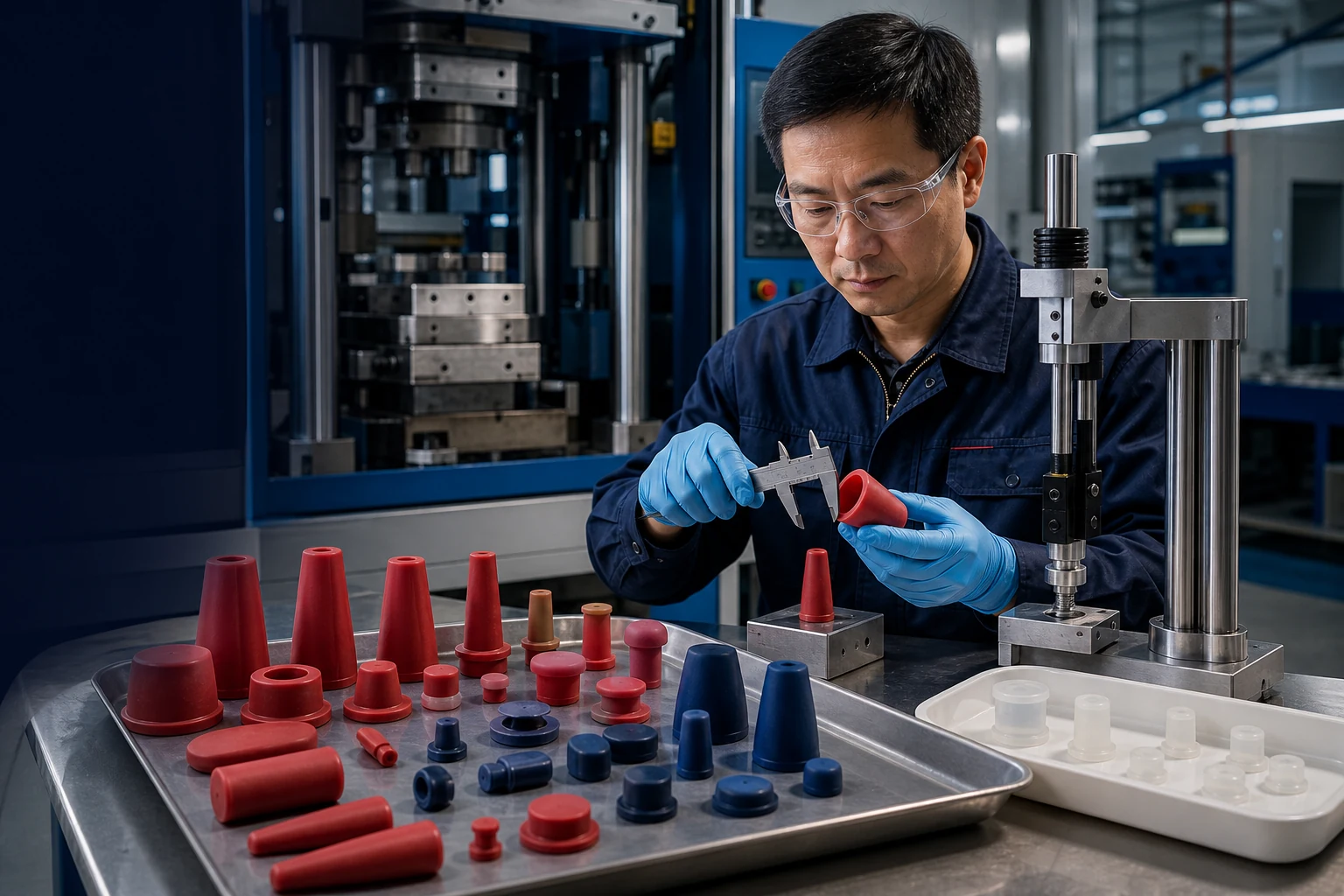
A small closure still needs the correct fit, force and material
Final material, geometry, tolerances and documentation must be confirmed against the drawing and operating conditions.
Silicone plugs, caps and stoppers are used to close holes, protect threads, seal tubes, mask surfaces during finishing and isolate medical or industrial interfaces. Performance depends on more than the nominal diameter: taper, interference, lip geometry, hardness and surface finish all affect insertion and retention.
LSAN develops tapered plugs, hole plugs, tube plugs, protective caps, sealing stoppers and high-temperature masking components from drawings, samples or application dimensions. Reusable handling features and removal methods can be included in the design.
For medical, food or chemical-contact projects, the required material documentation and cleaning conditions should be defined before material selection.
Closure formats for sealing, protection and masking
The right design depends on whether the part must seal, mask, protect, vent, retain or release under a defined force.
Tapered Plugs
Multi-size or application-specific plugs using controlled taper and interference.
Hole & Panel Plugs
Flexible closures for openings in housings, panels, equipment and fabricated assemblies.
Tube Plugs & Stoppers
Internal closures for tubing, ports, bottles, vessels and device interfaces.
Protective Caps
External caps for threads, connectors, tubes and machined surfaces.
High-Temperature Masking
Reusable plugs and caps for coating, painting, plating or thermal finishing processes.
Medical & Laboratory Stoppers
Custom closures developed around interface geometry and documented material requirements.
Define the part before tooling
| Interface dimensions | Hole or outside diameter, depth, taper, thread, edge condition and tolerance. |
|---|---|
| Fit requirement | Target insertion force, retention force, sealing pressure and removal method. |
| Hardness | Selected to balance flexibility, grip, reuse and dimensional stability. |
| Temperature / process | Continuous and peak temperature plus coating, cleaning or chemical exposure. |
| Handling features | Pull tab, flange, stem, grip texture, identification or automation features. |
| Reuse expectation | Single-use or target reuse cycles should be stated for validation. |
Values and options above are design starting points, not a universal product specification. Final capability depends on compound, geometry, size, tooling and inspection method.
Fit and handling should be designed together
- Provide the minimum and maximum interface dimensions, not only a nominal size.
- Use taper or lead-in geometry to reduce insertion damage and assembly force.
- Define whether sealing occurs on the side wall, end face, lip or multiple surfaces.
- Add a flange or pull feature when controlled removal and retrieval are important.
- Avoid thin tear-prone stems and sharp internal transitions in reusable parts.
- For masking, identify which surfaces must remain protected and the coating or cure process involved.
Choose the compound around exposure and function
General-Purpose Silicone
Used for many protective plugs, caps and industrial closures.
High-Temperature Silicone
Selected for powder coating, painting and thermal masking after process-temperature review.
Food-Contact Silicone
Available compounds can be reviewed against the stated food-contact documentation requirement.
Medical-Grade Options
Considered for device and laboratory projects when the required supporting documents are defined.
Fluorosilicone
Reviewed where fuel, oil or chemical exposure may attack standard silicone.
Color-Coded Compounds
Custom colors can support identification, size coding and production handling.
From requirement review to repeat production
A staged process makes approval criteria visible early and reduces avoidable sampling loops.
Interface Review
Confirm mating dimensions, tolerance, fit, sealing, environment and handling.
Fit & Material Proposal
Define taper, interference, hardness, grip and manufacturing route.
Tooling & Samples
Produce samples for insertion, retention, sealing and removal checks.
Process Validation
Test the part in the real masking, cleaning, sterilization or assembly cycle.
Production Release
Control dimensions, appearance, color, hardness and agreed functional criteria.
Where these parts are used
Silicone closures combine flexibility, temperature resistance and reusable handling across manufacturing and equipment applications.
Medical & Laboratory
Ports, device interfaces and stoppers with project-specific material requirements.
Aerospace & Defense
Protective caps and plugs for sensitive openings, connectors and maintenance operations.
Finishing & Coating
High-temperature masking for powder coating, painting, plating and related processes.
Industrial Equipment
Tube, port, panel and thread protection during assembly, shipment or service.
Quality points for plugs, caps and stoppers
- Mating dimensions and taper checked against the interface tolerance range.
- Flash, tears, deformation and surface defects inspected, especially around sealing edges and pull features.
- Insertion and retention tested using an agreed interface or fixture when fit is critical.
- Material, hardness and color verified against the approved sample and specification.
- Reuse or high-temperature process testing applied when the purchase requirement defines a cycle.
Documentation is material- and project-specific
Food-contact, medical, flame-retardant, electrical or chemical requirements should be stated at RFQ stage. LSAN will review the requested standard and available material documentation before quotation. A material option should not be treated as certified for every application unless the corresponding documentation is supplied and accepted.
STEP/STP, IGES, PDF drawing, material or regulatory requirement, annual quantity, target hardness, color and intended operating environment.
Manufacturing context behind the guidance
5,000 m²Production facility
Nanjing Lsan Co., Ltd. develops and manufactures silicone rubber products in Nanjing, China. Technical content on this page reflects our manufacturing workflow and is intended to help engineers and buyers prepare a more complete RFQ. Final recommendations are made only after application and drawing review. Page updated August 2026.
Questions buyers ask before requesting a quote
How much interference should a silicone plug have?
There is no universal percentage. Diameter, taper, hardness, insertion depth, sealing pressure and removal force must be reviewed together.
Can one tapered plug fit several hole sizes?
A tapered design can cover a limited range, but sealing position and retention vary. The minimum and maximum hole dimensions should be tested.
Can masking plugs be reused?
Often yes, but reuse depends on temperature, coating buildup, cleaning method, handling damage and the acceptance criteria.
Can you color-code different plug sizes?
Yes, custom colors can support size identification and assembly control, subject to material and color-matching review.
Can caps include pull tabs or automated handling features?
Yes. Tabs, stems, flanges and grip features can be molded into the design when their loads and space are considered.
Continue your technical review
Compare adjacent manufacturing routes before fixing the material and tooling strategy.
Have a drawing, sample or application challenge?
Send the requirements and LSAN will help define the next practical manufacturing step.